Overview
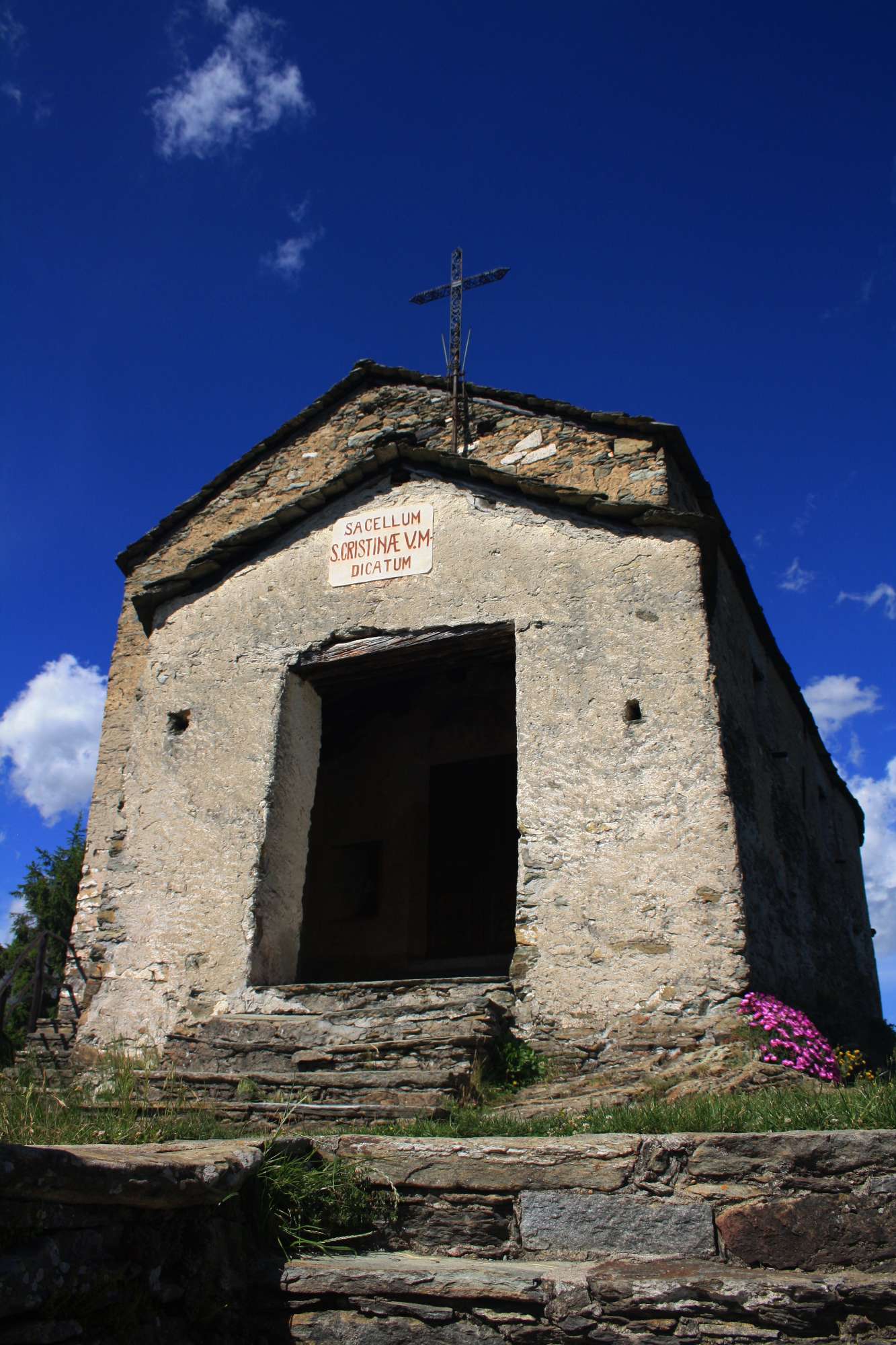
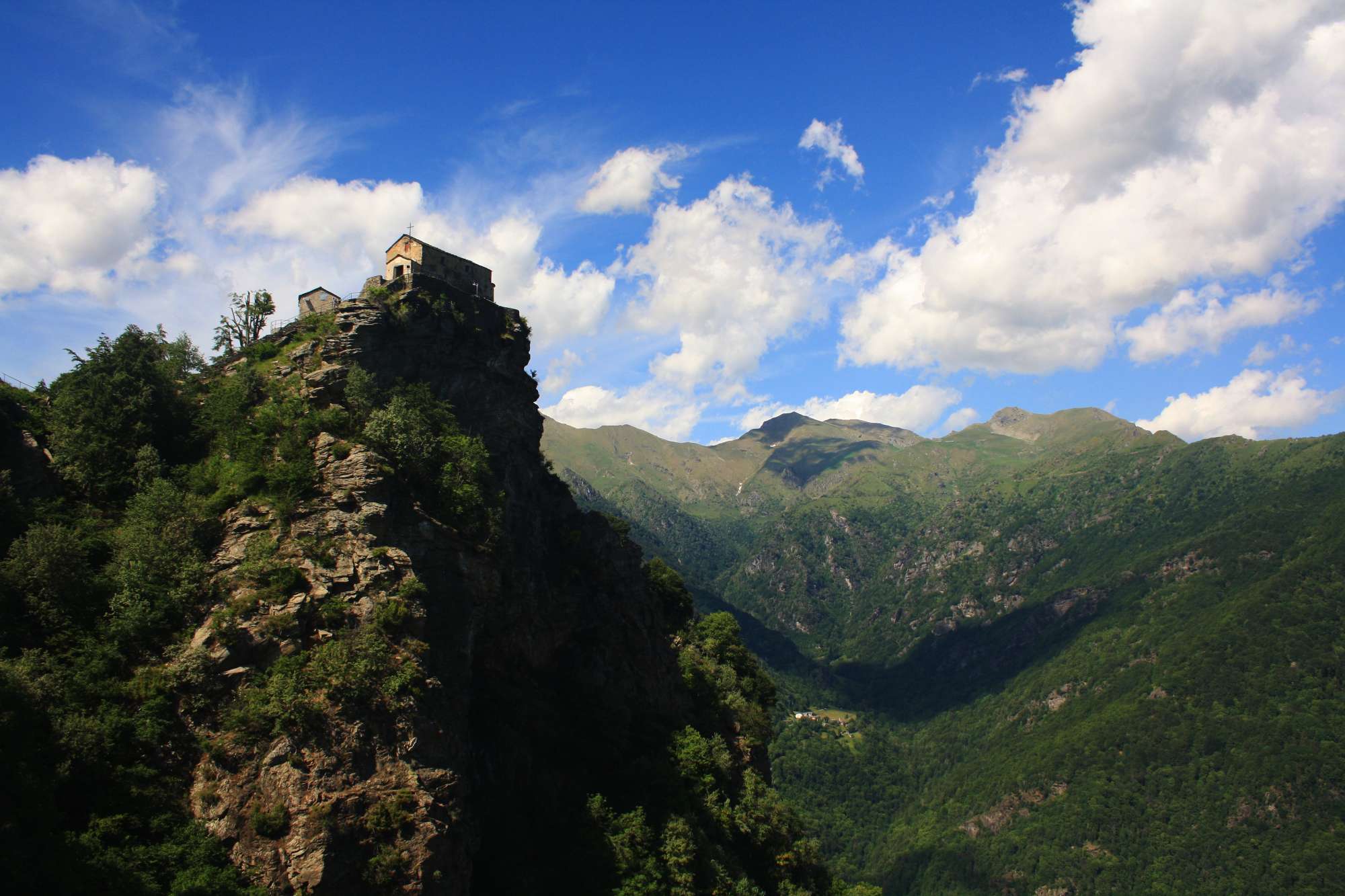
A loop itinerary between the municipalities of Ceres and Cantoira that leads to the Sanctuary of Santa Cristina, perched on a cliff at an altitude of 1,340 m, on the edge of the watershed ridge between Val d’Ala and Val Grande.
Starting point
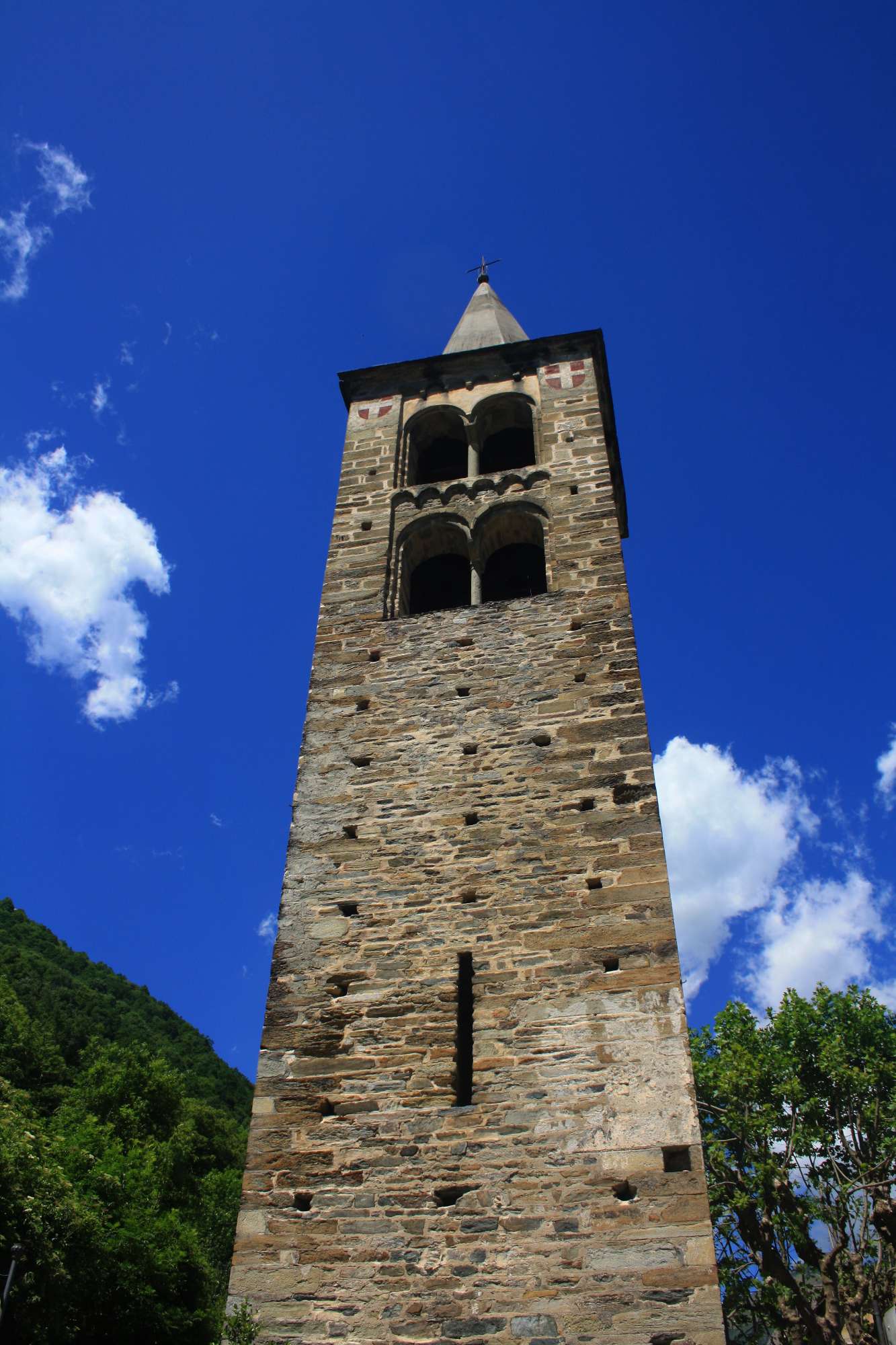
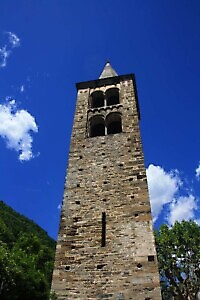
DirectionsFrom the Santa Marcellina Bell Tower, reachable via a staircase from the parking lot below, go down the main street of the village (Via Roma) until you reach a turn-off on the right marked with signposts. Take the paved road to the right and follow it until the surface becomes a dirt track; shortly after, you will find the path to the Sanctuary on the right, which climbs steeply into the woods.
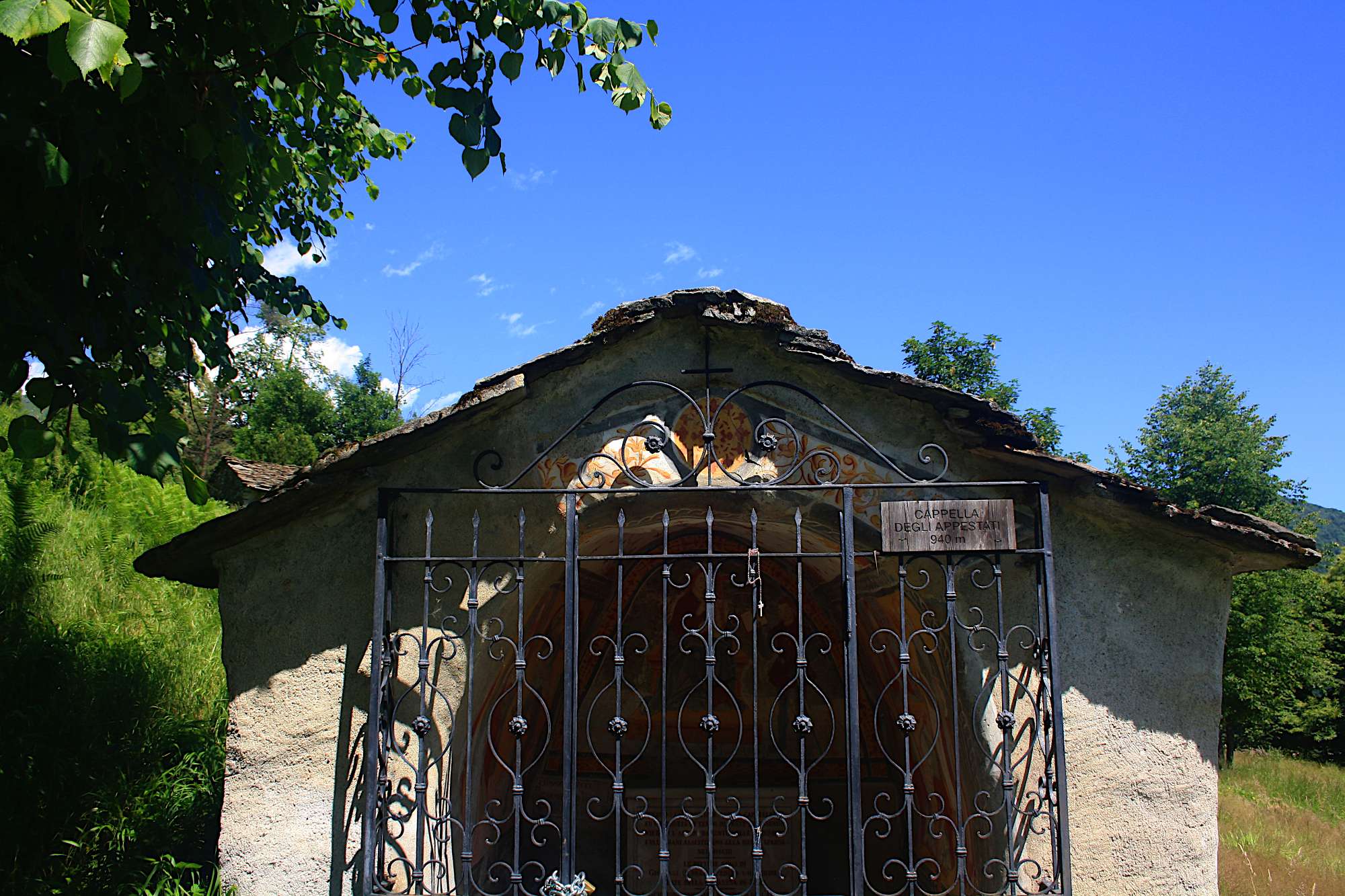
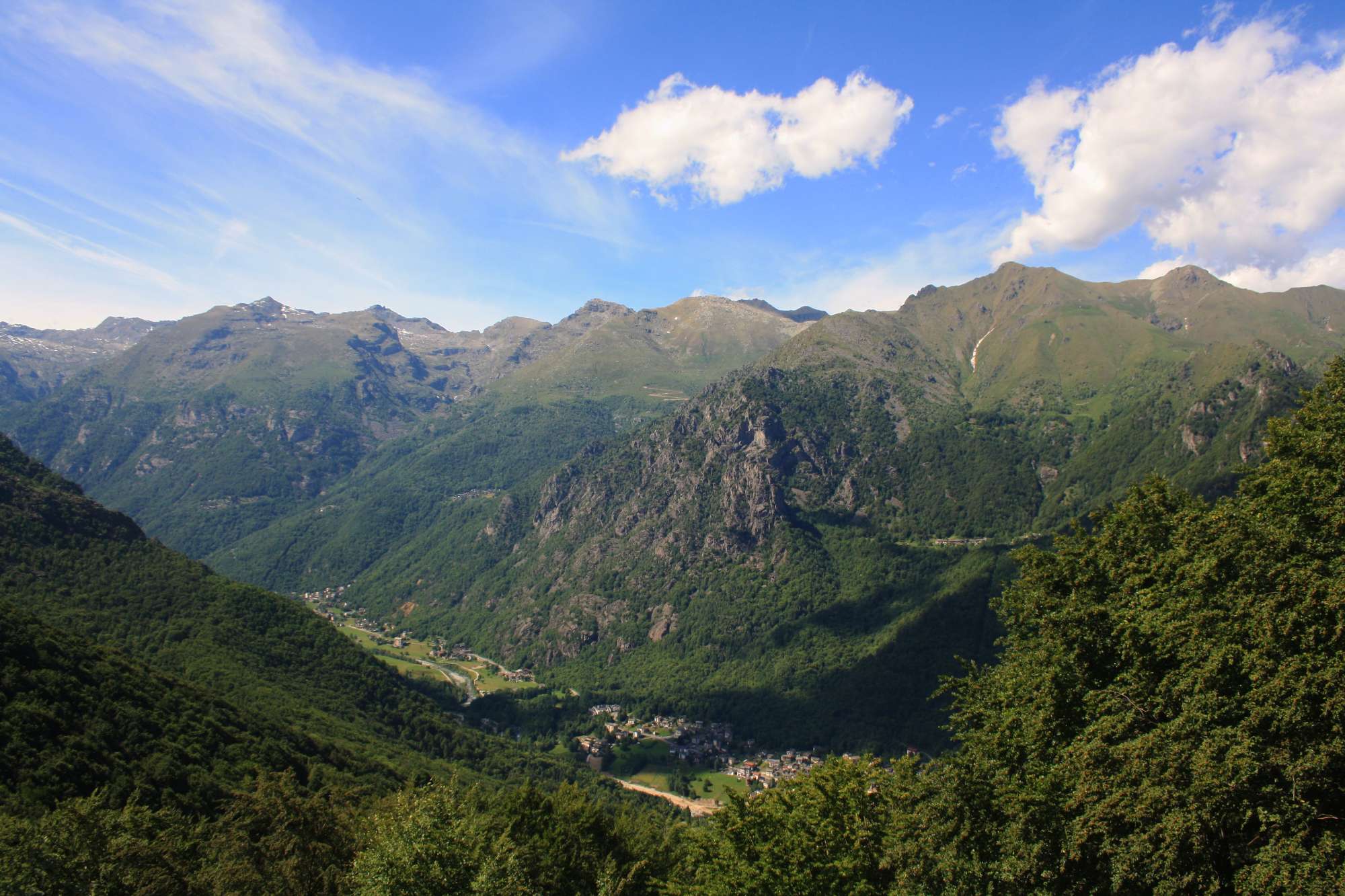
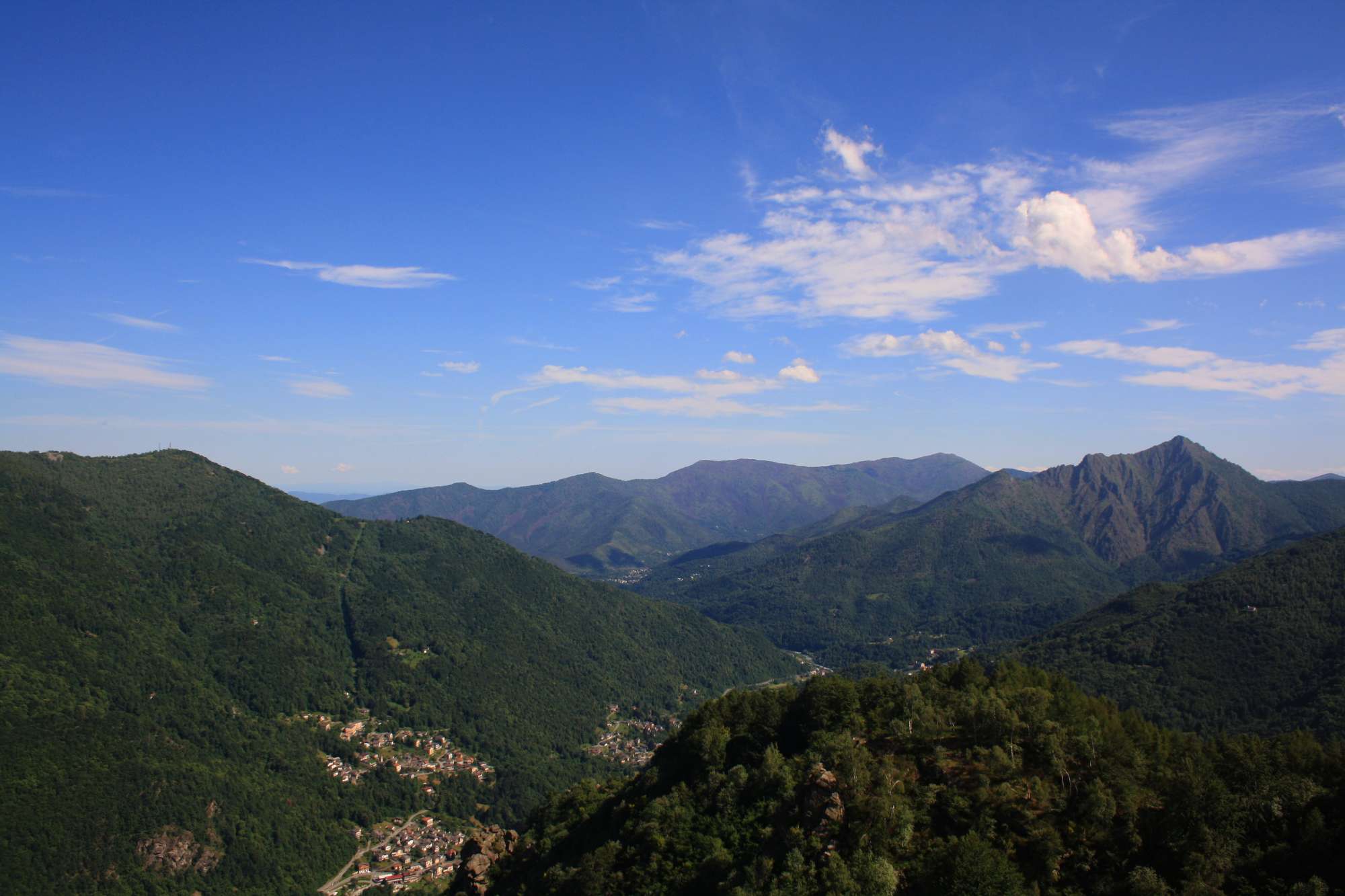
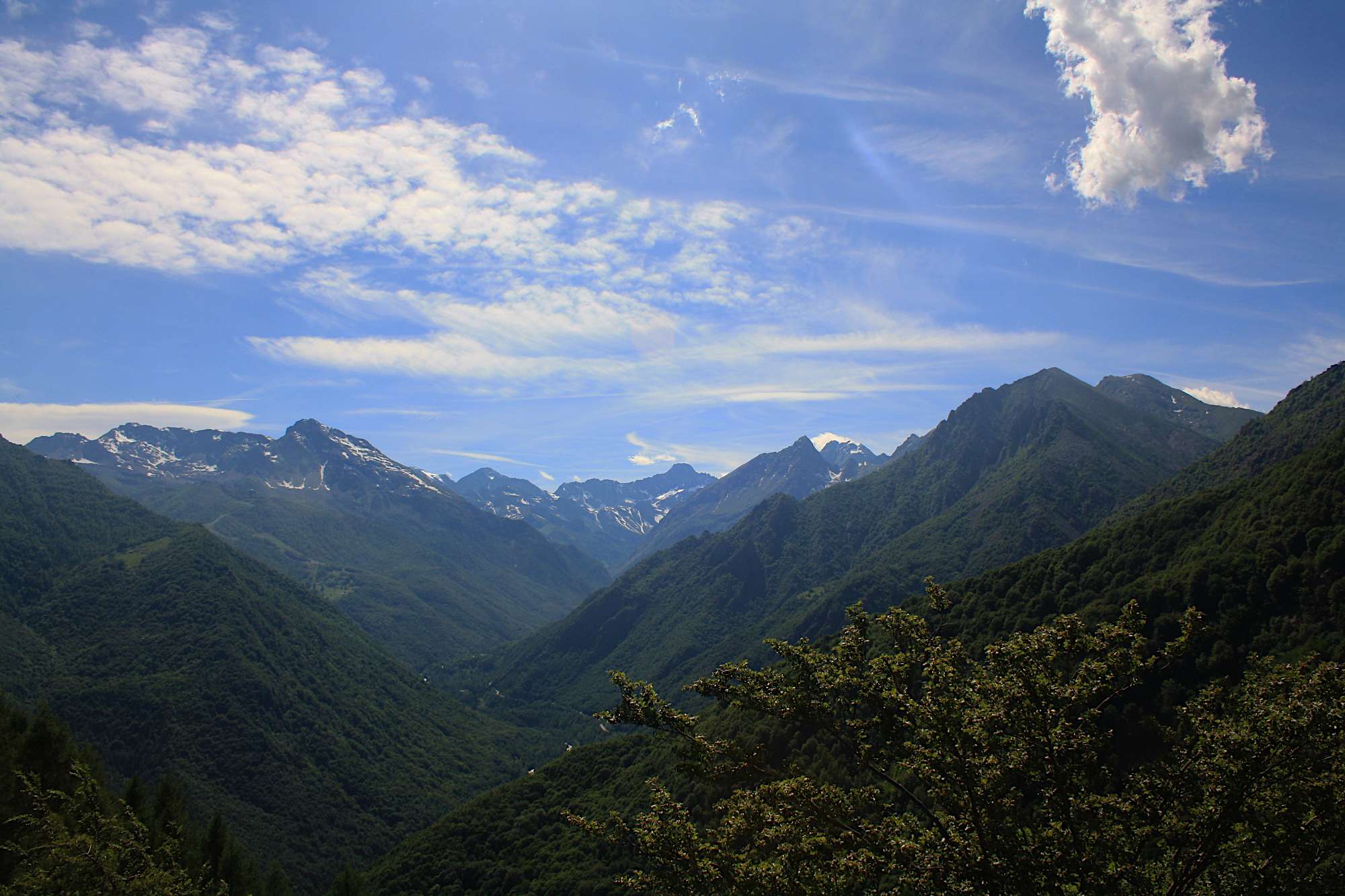
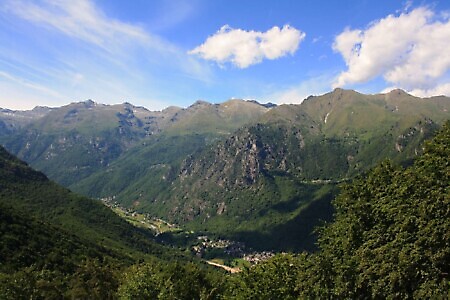
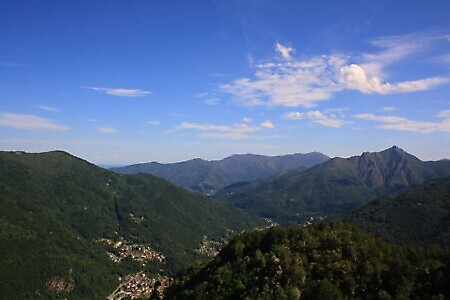
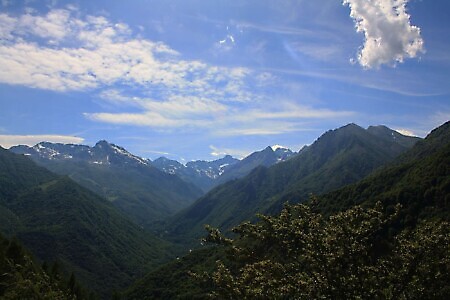
The path cuts perpendicularly across a cart track at several points, reaching first the houses of Pian di Ceres, then the Plague Chapel and the Chapel of the Angels. The itinerary continues through the woods, reaching Col Balance and from there, in 15 minutes, the staircase leading to the Sanctuary. From the cliff, looking west, you can enjoy a wide panoramic view of Val Grande, while to the east, the view stretches over the lower Lanzo Valleys, with the Uja di Calcante standing out in the distance. To the south, the iconic peaks of Val d’Ala can be seen, including the Bessanese and the Uja di Mondrone.
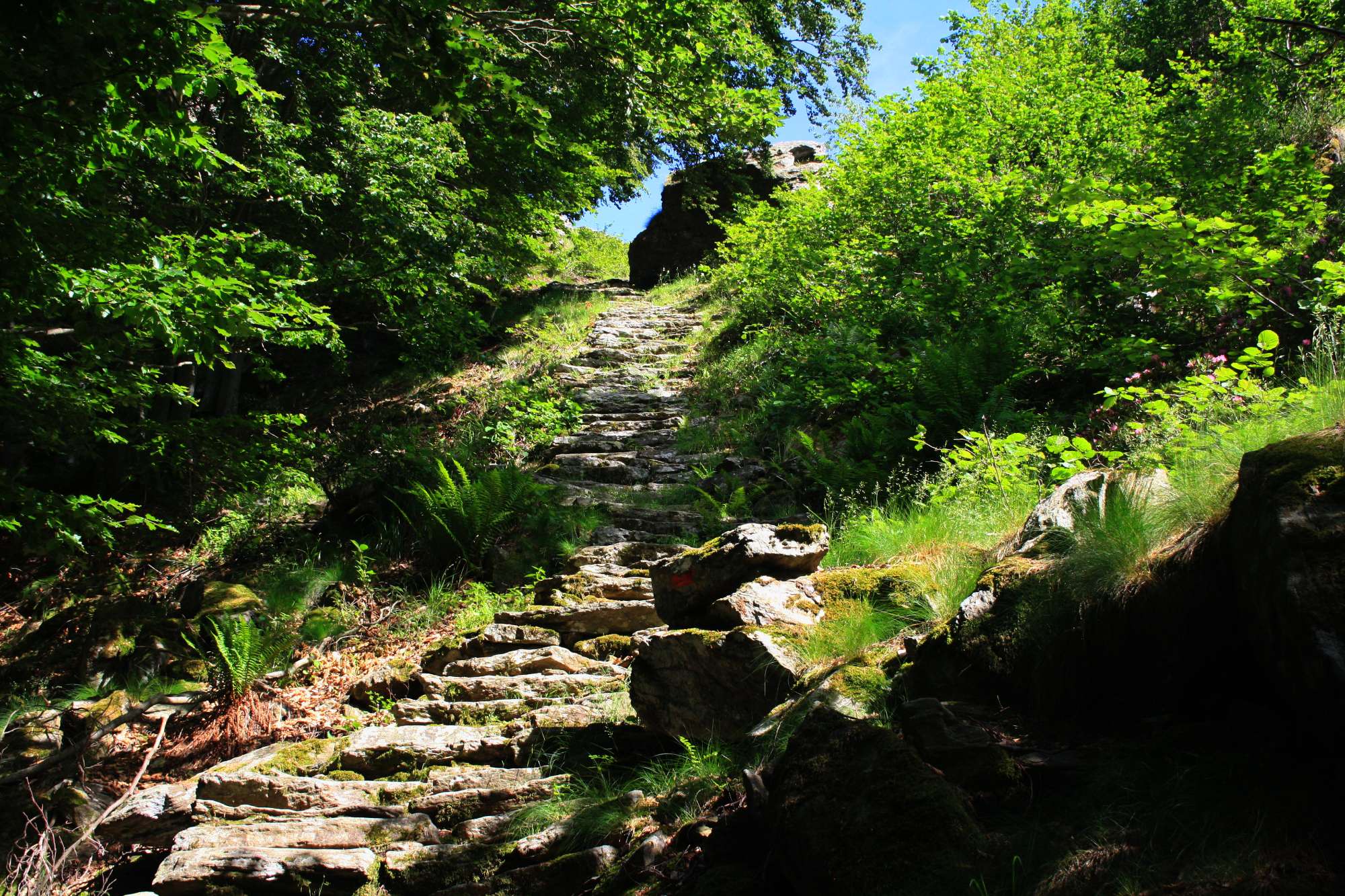
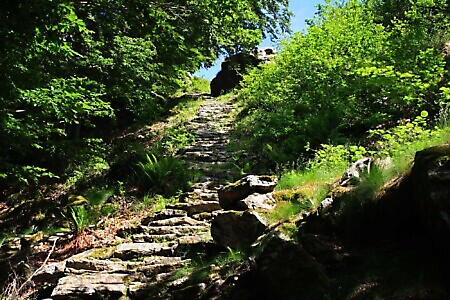
The loop continues towards Cantoira, descending along a characteristic stone staircase that enters the woods. Follow path 301 downhill, which cuts across a cart track at several points until you reach the Val Grande Nature Trail on the right. Follow it until, just before the provincial road, you find a path that climbs back into the woods to the Ceres cemetery. From the cemetery, continue along the paved road that climbs to the right and keep straight along a panoramic path overlooking the town of Ceres, which quickly leads back to the Santa Marcellina Bell Tower.
Curiosities
Plague Chapel
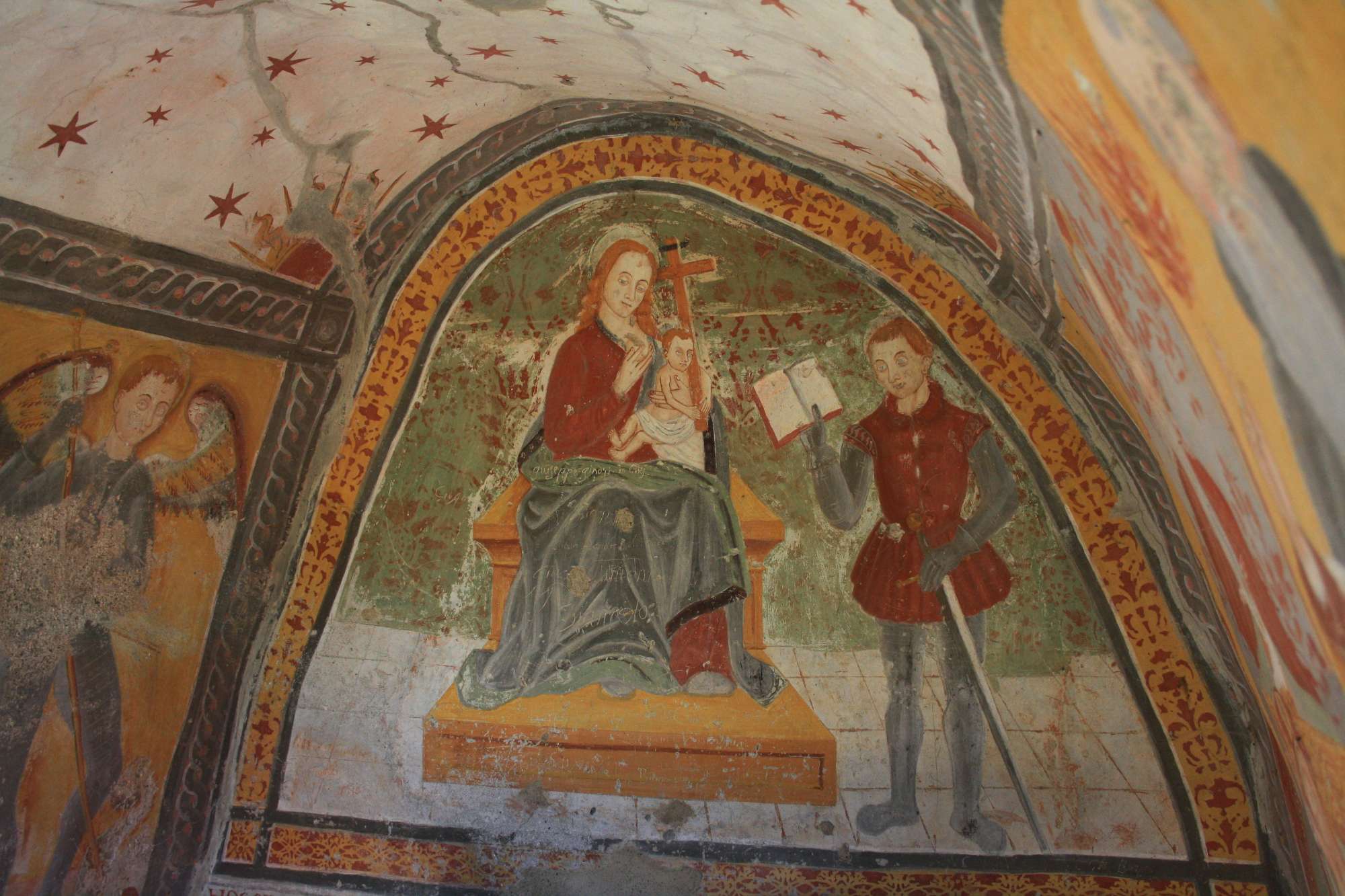
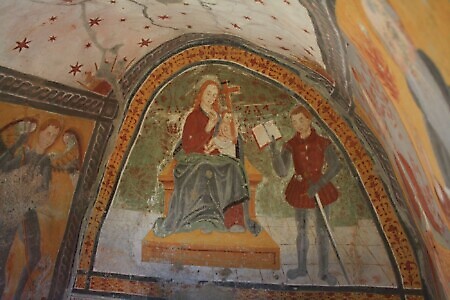
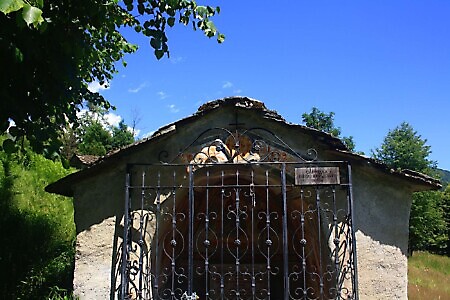
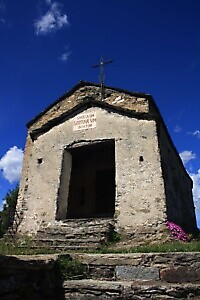
The Plague Chapel was built around 1575, the year the plague struck the Lanzo Valleys, specifically to allow people to attend mass without the risk of contagion; it is located in the woods, outside the town center, and its dimensions are extremely small to accommodate only the celebrating priest, while the villagers attended mass scattered on the grass to avoid any contact with each other. The Plague Chapel contains valuable frescoes by Giovanni Oldrado Perini (Perino) della Novalesa. The paintings depict: in the background, above the altar, the Virgin enthroned nursing the Child and, to the side, a young man dressed as a page offering her a book, presumed to be the son of the patron (Pietro Castagneri). Saint John the Baptist and Saint Michael the Archangel are depicted on the left wall. On the right wall, we find Saint Christina, the Trinity (God the Father holding the crucified Christ, upon whom the Dove of the Holy Spirit rests), and Saint Anthony the Abbot. To the left of the predella on which the Virgin's throne rests, there is an inscription certifying that these frescoes were painted in 1577 by Perini della Novalesa at the request of a certain Pietro Castagneri. These frescoes are now protected by an iron gate that closes the front of the chapel.
Sanctuary of Santa Cristina
The Sanctuary dedicated to Saint Christina was built in 1440, first as a modest chapel, then expanded in the 16th century and established as a sanctuary in the 17th century. In the 14th century, however, it seems a votive pillar dedicated to the martyr already existed, built following the appearance of Saint Christina to a young shepherd: it can still be seen today inside the chapel, to the right of the altar.
At the entrance, you can admire a paneled wooden door carved with scenes of the martyrdom of Saint Christina, while inside the walls are preserved about one hundred painted ex-votos dating back to the 19th and 20th centuries, and some traces of frescoes, one of which represents a Madonna enthroned with Child, with Saint Christina beside her. It is said that in the past, the Sanctuary was the subject of a dispute between the municipalities of Ceres and Cantoira; the ownership of the chapel went to the latter, while the cliff remained with the people of Ceres.